

by Achadu Gabriel, Kaduna
A wildlife and environmental Journalist has called on the Kaduna State House of Assembly to urgently address the persistent killing of international migratory bats in the gardens surrounding the Assembly Complex.
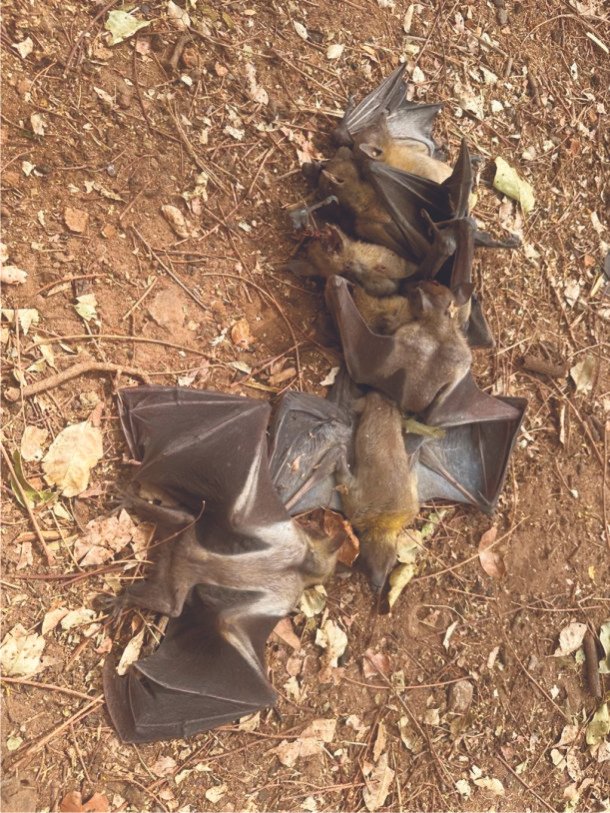
Speaking during a weekend survey of the bats, alongside other scientists, Ibrahima Yakubu, Head of Communication and Strategies at African Climate Reporters (ACR), expressed concern over the increasing attacks on the bats, which migrate annually to the historic garden, in order to give birth.
According to him, millions of migratory bats travel long distances to Kaduna due to the garden’s cool climate and tall trees, which provide a safe and suitable environment for breeding.
However, he described it as unfortunate that every year the bats face attacks from “bush-meat” hunters and illegal wildlife traders.
He explained that hunters use catapults and stones to kill the bats, selling each for between ₦200 and ₦300, depending on size.
Investigations revealed that some hunters arrive with bags, kill large numbers of bats, sometimes up to 50 or 60 per day, and transport them to undisclosed locations for sale as “bush-meat.”
Yakubu noted that the continuous killing of the bats is leading to a significant reduction in their population, with many injured bats unable to complete their return migration.
He warned that this poses a serious threat not only to the species but also to the ecological balance of the area.
One hunter, Mr. Denial Auta, admitted to killing and roasting bats for sale, stating that the business supports his family and helps him pay his children’s school fees.
He also revealed that hunters are aware of the specific months the bats migrate to the Kaduna Assembly garden, making it easier to target them for sale to undisclosed markets.
Further findings showed that bat hunters frequently gather along the street behind the Assembly garden in the evenings to carry out the killings.
A horticulture vendor operating near the garden (who requested anonymity) complained that the activities of the hunters are damaging plants and flowers in the area, and called on the State Government to intervene and halt the destruction.
Yakubu emphasized that stopping the attacks on migratory bats requires a multi-faceted approach, including public education to dispel myths about bats, enforcement of wildlife protection laws, and habitat conservation.
He highlighted the ecological benefits of bats, particularly their role in pest control and maintaining environmental balance.
He urged the Kaduna State Government, the Kaduna State Police Command, wildlife conservation groups, and other civil society organisations to take immediate action.
Specifically, he called for the deployment of security personnel around the garden to prevent further killings and the arrest of those involved in the ‘illegal’ hunting.
He also advocated for sustained awareness campaigns, both online and offline, so as to educate the public on the importance of protecting migratory species.
The situation in Kaduna reflects a broader global concern. In 2022, the United Nations warned that nearly one million plant and animal species worldwide are at risk of extinction due to climate change, pollution, and human activities.
Yakubu stressed that immediate and collective action is necessary to protect vulnerable species – like the migratory bats – in Kaduna.
By prioritizing education, enforcement, and conservation, he said, communities can coexist peacefully with wildlife, while safeguarding biodiversity for future generations.