

by Achadu Gabriel, Kaduna
The Global Peace Foundation (GPF) and Nigerian Faith leaders have demanded for “immediate and coordinated action” to address the escalating violence and insecurity threatening Nigeria’s stability.
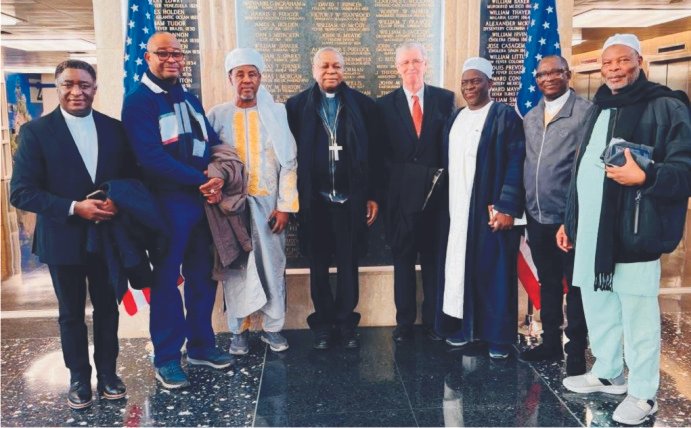
The warning came during a forum held at Pepperdine University, Washington, D.C, in February, which brought together senior Christian, Muslim, and traditional leaders from across Nigeria to discuss strategies for tackling rising insecurity challenges in the country and the wider African region.
Speaking at the forum, Rev. Fr. Canice Chinyeaka Enyiaka, Director of African Peace Initiative and Engagement at GPF, described religious faith as a critical force capable of uniting communities and fostering peace.
He stated that faith leaders possess both moral authority and the trust of local communities, making them essential actors in addressing Nigeria’s complex security challenges.
“Religious faith is a powerful force in Nigeria, and with a united voice, we can bring positive change to the country,” Fr. Canice said, highlighting the unique role of faith leadership in peace-building and reconciliation.
The forum painted a stark picture of Nigeria’s crisis, where armed gangs, terrorist groups, and insurgents have seized control of villages, kidnapped children, destroyed schools, and displaced millions of citizens.
“Since the rise of Boko Haram, in 2009, over 40,000 people have been killed, and vast tracts of agricultural and residential areas remain devastated. Many displaced persons continue to live in overcrowded camps, while returning home often exposes them to threats from extremist groups.”
Cardinal John Onaiyekan, a leading Catholic figure, warned that many of Nigeria’s challenges are self-inflicted and must be addressed with both moral and practical governance.
“Leaders claim to be religious; yet, neglect the core responsibilities of office. Moral leadership must guide practical governance, if we hope to restore peace and stability,” he said.
In his remarks, Rev. Yunusa Nmadu, Jnr, who is former ECWA General Secretary, emphasized the importance of interfaith collaboration, advocating for joint services, shared community spaces, and moral education to teach compassion and coexistence.
“I shouldn’t be afraid to attend a service at a mosque,” he said, underlining the need for trust and understanding between Muslims and Christians.
Sheikh Muhammad Abubakar Sadeeq highlighted the crucial role of women and youth in sustaining peace. “Once youth are committed to peace, terrorists and bandits will have fewer avenues to recruit and destabilize communities,” he said.
The forum also drew attention to the near collapse of State Authority in some rural areas, where terrorists extort taxes, seize harvests, conduct sham elections, and attempt to impose their own governance.
“Accordingly, millions of displaced persons continue to live in dire conditions in camps, with little prospect of safely returning home. This should not be possible in 2026,” Cardinal Onaiyekan remarked.
Dr. Paul Murray, GPF’s International Vice President for Religious Freedom Initiatives, stressed the importance of connecting faith leaders’ local insights with global policymakers.
“Governments can negotiate policy, but faith leaders shape conscience, credibility, and community trust. Without their voices at the table, any long-term strategy will remain incomplete,” he said.
Former U.S. Ambassador-at-Large for International Religious Freedom, Ambassador Sam Brownback, echoed the urgency of the moment, warning that “Nigeria risks losing stability, if immediate solutions are not implemented.”
The Washington Forum follows a December 9, 2025, meeting in Abuja, also convened by GPF Nigeria, where faith and traditional leaders challenged political leadership over failures to provide security and uphold the rule of law.
The Abuja communiqué called for the establishment of a Joint Interfaith Advocacy Committee, quarterly consultations, and systematic documentation of violence and hate speech.
Distinguished participants at the Washington Forum included Cardinal John Onaiyekan; His Royal Highness Alhaji (Dr.) Hassan Attahiru, Emir of Bungudu in Zamfara State; Rev. Joseph John Hayab, Chairman of Northern Christians and GPF Nigeria Country Director.
Others were: Sheikh Muhammad Abubakar Sadeeq, Imam of the National Mosque; Imam Fuad Adeyemi, Chief Imam of the Abrahamic Mission; Rev. Yunusa Nmadu, Jnr, of Christian Solidarity Worldwide Nigeria; and Rev. Fr. Canice Chinyeaka Enyiaka, respectively.